
 Local Journalism Initiative
By Sonal Gupta, Local Journalism Initiative, Canada’s National Observer
Some of Canada’s biggest economic ambitions run through small cities in northwest BC. Terrace and Prince Rupert sit along BC’s trade corridor to the Pacific, where the province and Ottawa are looking to expand LNG exports, mining, transmission infrastructure and port capacity tied to Asian markets. But they’re already struggling with tight rental markets, aging infrastructure and little room for the workers needed to support that growth.
Their mayors say governments are moving quickly on major projects while housing plans for the small cities absorbing the pressure lag behind.
“There’s a wave coming to northwest BC that I do not believe anybody can brace for,” Terrace Mayor Sean Bujtas told Canada’s National Observer. “And we’re already behind.”
Last week, Prime Minister Mark Carney and BC Premier David Eby signed a multi-billion-dollar agreement to accelerate major energy and trade projects across the province, including LNG projects, the Red Chris mine expansion, the North Coast Transmission Line and support for the ports of Prince Rupert and Stewart. The agreement followed a $50-million investment announced two weeks earlier for coastal communities affected by nearby industrial development.
Bujtas called the new investment “a good start,” but said he has asked the federal and provincial governments for details on how much Terrace would receive and what the funding can be used for. He said the announcement appeared to include infrastructure such as water, rather than specifically housing.
If Terrace received half of the $50 million spread over five years, Bujtas said it would help, but even that would not be enough to prepare the city for the scale of growth expected around it.
“You’ve got a community of 13,000 people being asked to carry the weight of a nation on their backs.”
Sean Bujtas, Mayor of Terrace
“We needed an investment yesterday,” he said. “We don’t need it five years from now.”
Terrace is already feeling housing pressure. Previous projects have already driven up housing and construction costs and the concern now is that the next wave of development is arriving before the city has the homes, infrastructure or staff capacity to absorb it.
“You’ve got a community of 13,000 people being asked to carry the weight of a nation on their backs,” he said.
Growth without enough homes
Terrace is where much of northwest BC’s industrial growth touches down. Workers moving to mines, LNG sites, transmission projects and port-related jobs often pass through its airport, stay in its rentals and rely on its roads, stores, health-care services and child care.
Despite adding about 800 housing units over the past 12 years, Bujtas said the city has not been able to keep pace with demand. Its vacancy rate has remained “next to zero,” he said.
A 2025 city report identified 131 people experiencing homelessness in Terrace — more per capita than either Victoria or Vancouver — but locals say the figure is likely an undercount because many people are couch surfing, staying with relatives or living in vehicles.
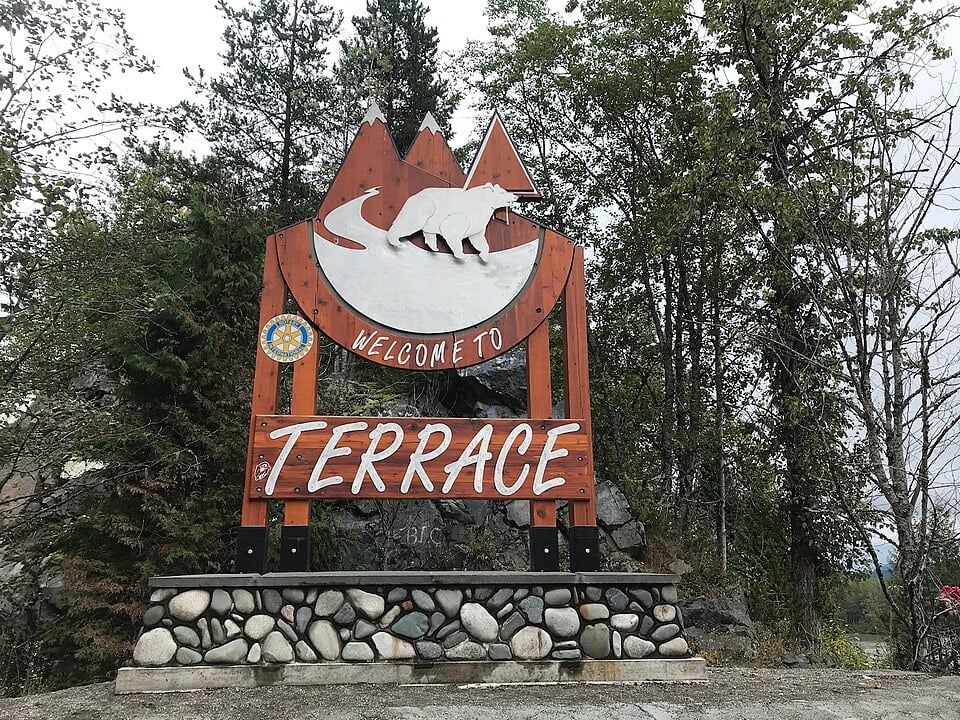
Bujtas said Terrace is surrounded by industrial growth, including projects tied to Red Chris and Brucejack — two major copper and gold mines — but many projects sit outside the city’s municipal boundaries. He pointed to Kitimat, about 60 kilometres south of Terrace, which hosts LNG Canada and Rio Tinto and has an industrial tax base Terrace does not. As a result, Terrace is left absorbing higher construction costs, road use and housing pressure tied to regional growth without benefitting from the same revenue.
Bujtas is seeing businesses struggling to hire workers for entry-level jobs because people cannot afford to live in the city. “People that have jobs that are what you would want to consider ‘career jobs’ are taking second jobs just to make sure they can pay rent,” he said.
Prince Rupert, a coastal city of about 12,000, is facing similar pressure as port activity expands. Its port was the saving grace of the town; Mayor Herb Pond said following job losses in fishing, logging, pulp and sawmills in the early 2000s, the city began to recover after a container terminal opened in 2007. Many residents support growth and remember the years when the city was losing people and industry.
“If you are in one of those big jobs, you’ve got opportunities, but if you’re not, you’re being sort of dragged along.”
Herb Pond, Mayor of Prince Rupert
But he said the housing market is being pulled apart by the same economic recovery governments are celebrating.
Construction workers often arrive with money in their pockets, willing to pay more for short-term rentals, he said. Several workers may rent one house together. Industrial workers in higher-paying jobs can compete for housing in ways lower-paid residents cannot. “If you are in one of those big jobs, you’ve got opportunities,” Pond said. “But if you’re not, you’re being sort of dragged along.”
Pond said LNG Canada’s project in Kitimat went through an environmental assessment process in which housing impacts were considered. Prince Rupert’s port growth has not come with the same kind of housing obligations attached to individual projects, he said.
“There’s been no onus on the companies to provide housing.”
‘The definition of poverty has changed’
The housing shortage is also affecting recruitment. In health care, administrators have told Pond applicants for essential jobs have turned down offers after looking for homes in Prince Rupert.
“You’re trying to attract people into industrial jobs but your emergency room is closed because you can’t attract doctors,” Pond said. “Rather than just having housing as a challenge, you’ve got housing and health care.”
“Poverty has expanded into the working class. The nature, the definition, of poverty has changed.”
Paul Lagace, coordinator/poverty law advocate with the Prince Rupert Unemployed Action Centre
The pipeline of future health-care workers faces the same problem. Ankur Patel, a Kitimat resident training for a career in nursing in Terrace, said students preparing for health-care jobs in the region often have to move between communities for school and placements, paying for housing in more than one place while also covering travel, food and course costs. As a result, many young people are pulled towards urban centers where housing is more affordable.
“It’s real damn expensive, and costs are rising,” Patel said. “It’s difficult to be educated up here.”
Paul Lagace, who specializes in tenancy and poverty law, said Prince Rupert’s housing crisis is no longer limited to people traditionally understood as vulnerable. “Poverty has expanded into the working class,” he said. “The nature, the definition, of poverty has changed.”
He said renters who have lived in the same place for years may still have manageable rent. But once a building sells or a tenant is pushed back into the market, the cost can double.
Of the eight rentals currently advertised on Kijiji in Prince Rupert, none are listed for under $1,800.
Lagace said the situation reminds him of what he saw years earlier in Kitimat, where industrial growth and living-out allowances helped drive rents sharply higher. Those allowances can be “disastrous” in a tight market, he said, because they allow outside workers to pay amounts local residents cannot match.
The Kitimat mayor’s office did not respond to a request for an interview.
Pond said Prince Rupert has tried to make housing easier to build by waiving some fees, removing downtown parking requirements and working with First Nations on housing projects.
But local tools only go so far, he said. Prince Rupert’s geography makes construction expensive because much of the city is built on rock and muskeg. Years of limited growth also mean there is not a long track record of new projects for lenders to assess.
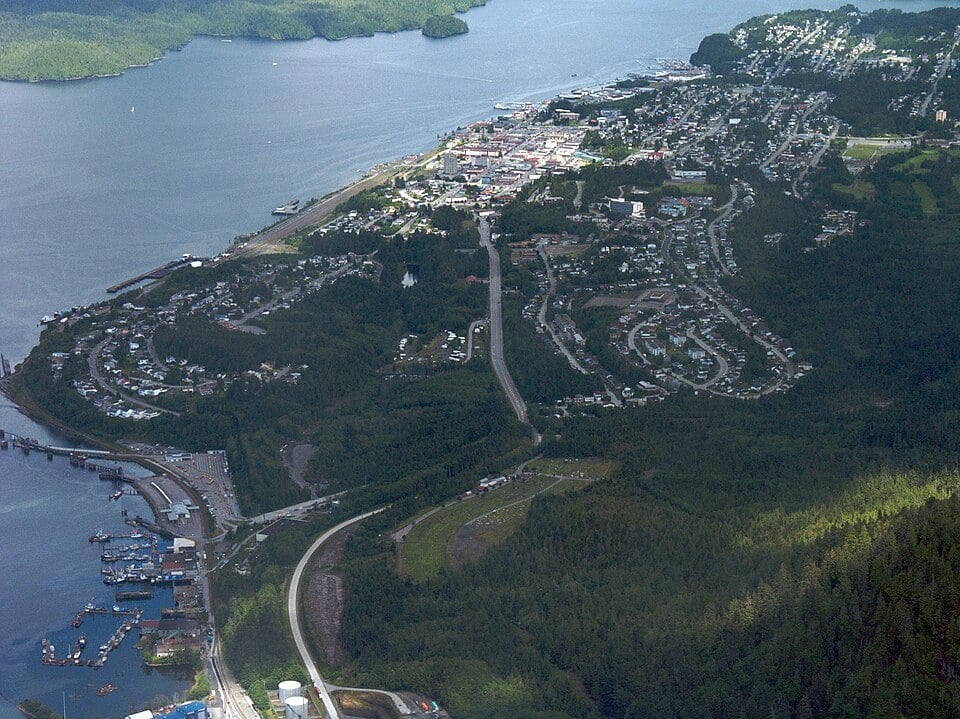
Housing isn’t the only pressing issue in Prince Rupert, either. While he welcomes the national attention on Prince Rupert’s role in Canada’s economy, the city is still dealing with basic infrastructure gaps, Pond said: Water pipes are failing and the system needs rebuilding. The city is also facing pressure to build sewage treatment in a community that has never had it.
“When you turn the tap, you want to have cold, clear drinking water come out, and when you flush the toilet, you want the stuff to go away,” Pond said. “If you want this port to succeed, it needs clean, clear drinking water.”
The city is now replacing about a third of its water pipes, a project Pond said will cost more than $200 million.
“You’re competing with communities like Vancouver, Edmonton, Calgary, Halifax, Toronto, Ottawa, Prince George. We stood no ability to compete against these.”
Sean Bujtas, Mayor of Terrace
Both cities applied to the federal Housing Accelerator Fund, meant to help communities across Canada speed up homebuilding, but were unsuccessful. Bujtas said the program’s design put Terrace (with a population of 13,000) at a disadvantage. Under the fund, communities with populations of 10,000 or more were placed in the large/urban stream.
“You’re competing with communities like Vancouver, Edmonton, Calgary, Halifax, Toronto, Ottawa, Prince George,” Bujtas said. “We stood no ability to compete against these.”
In an emailed response, a spokesperson for the provincial Ministry of Housing and Municipal Affairs pointed to funding for infrastructure and housing-related supports in northwest BC, including up to $50 million in federal funding secured for coastal communities, (with priority to projects in Terrace and Prince Rupert), as well as more than $34 million each for Terrace and Prince Rupert through the Resource Benefits Alliance and provincial measures it says are meant to make housing easier to build.
Canada’s National Observer emailed the Prime Minister’s Office, the Major Projects Office and the federal and housing ministry but did not hear back before publication deadline.
A share of the benefits
The mayors said the province has taken one important step through the Northwest BC Resource Benefits Alliance — a five-year revenue-sharing agreement signed in 2024 with 21 local governments across the region. The agreement is sending provincial money to northwest municipalities for core infrastructure such as roads, water and sewer systems.
Bujtas said Terrace is receiving about $7 million a year for five years through the deal, money the city is using for basic infrastructure rather than new amenities. “We’re not in a position to do any kind of sexy project with that,” he said. “We’re getting the sewer fixed. We’re getting water lines fixed. We’re getting roads fixed.”
“We want to help Canada solve its economic problems, but help solve Terrace’s problem while we’re at it.”
Sean Bujtas, Mayor of Terrace
That agreement is temporary, but Bujtas believes it should become permanent, especially as more major projects move ahead.
He added major projects should come with impact agreements for nearby municipalities, so local taxpayers are not left covering the costs of growth that benefits senior governments. LNG Canada, he added, is expected to generate roughly $575 million a year for higher levels of government. Redirecting even $10 million a year to an affected municipality would be “a rounding error” for senior governments, he said, but “a life-changing moment” for a community like Terrace.
“We want to help Canada solve its economic problems,” Bujtas said. “But help solve Terrace’s problem while we’re at it.”