
 Scott Rohan
On Wednesday, the House of Commons defeated Bill C-264 at second reading — the Conservative private member’s bill that would have repealed the North Coast oil tanker ban. The Canadian Press reported the vote fell along party lines: only the Conservatives voted to send the bill to committee, and the Liberals voted it down. Prime Minister Mark Carney made a rare in-person appearance to cast his vote.

The bill, sponsored by Conservative MP David McKenzie, would have repealed the Oil Tanker Moratorium Act — the law that since 2019 has barred tankers carrying more than 12,500 tonnes of crude oil from BC’s northern coast.
The vote on the private member’s bill clearly mattered to the north coast, particularly Prince Rupert. Conservatives tied the repeal to a proposal from Calgary-based Strathcona Resources to ship up to 250,000 barrels of crude a day by existing rail to a new export terminal at Prince Rupert, then out by tanker. With the ban intact, that plan has no route forward. As CFNR reported, it is the second time this year a push to repeal the ban has failed.
The first came in July 2026, when Prime Minister Mark Carney and then-Premier David Eby signed an agreement to keep the North Coast tanker ban in place “without alteration, suspension, or narrowing of scope.” That deal — part of the same negotiations that pushed Alberta’s proposed Pacific Link pipeline onto a southern route, away from the North Coast — reaffirmed the ban months before Bill C-264 came to a vote.
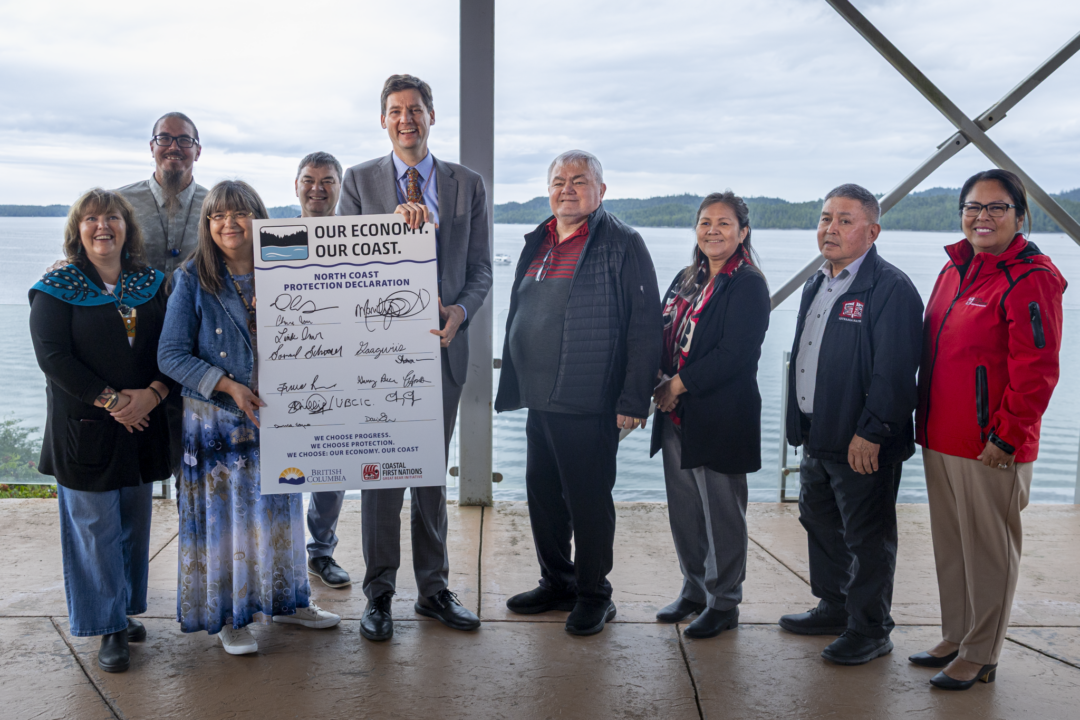
It is not the last word, and the backers made that plain. Conservative natural-resources critic Carol Anstey said her party is “willing to work with the Liberals to bring forward amendments.” Alberta Premier Danielle Smith, who supported the repeal, called it “an important step toward securing better prices for our resources.” Carney, for his part, struck a deal with the BC government this summer to keep the ban in place.
What the vote does not change is also worth stating. The Strathcona terminal remains a pitch — not built, not approved, with no published cost, financing or timeline — and it still lacks the federal exemption it would need. C-264 was a private member’s bill defeated at second reading, which settles this bill but not the larger question.
For a port city where terminal decisions shape jobs and traffic for years, it is the most consequential federal vote on the proposal yet — and, by the proponents’ own account, not the end of the push.