 Local Journalism Initiative
By Matt Simmons, Local Journalism Initiative Reporter, The Narwhal
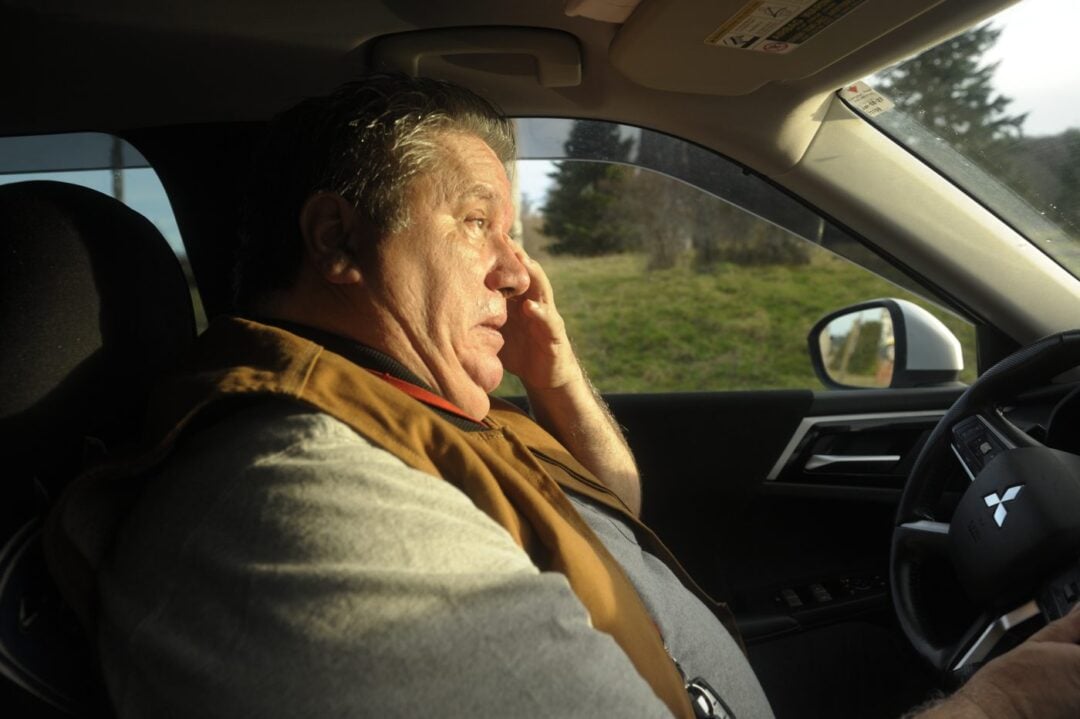
‘Na̱mg̱is Chief Ho’miskanis, Don Svanvik, is on the phone when I walk off the little ferry in Alert Bay, B.C.
“Standing water and wood is never good,” he says to the person on the other end. “I can come by after I drop my truck off, maybe tomorrow.”
Svanvik, a hereditary chief and former elected chief, hangs up and tells me he was talking to someone in Port McNeill, B.C., about a support system for a totem pole he helped carve.
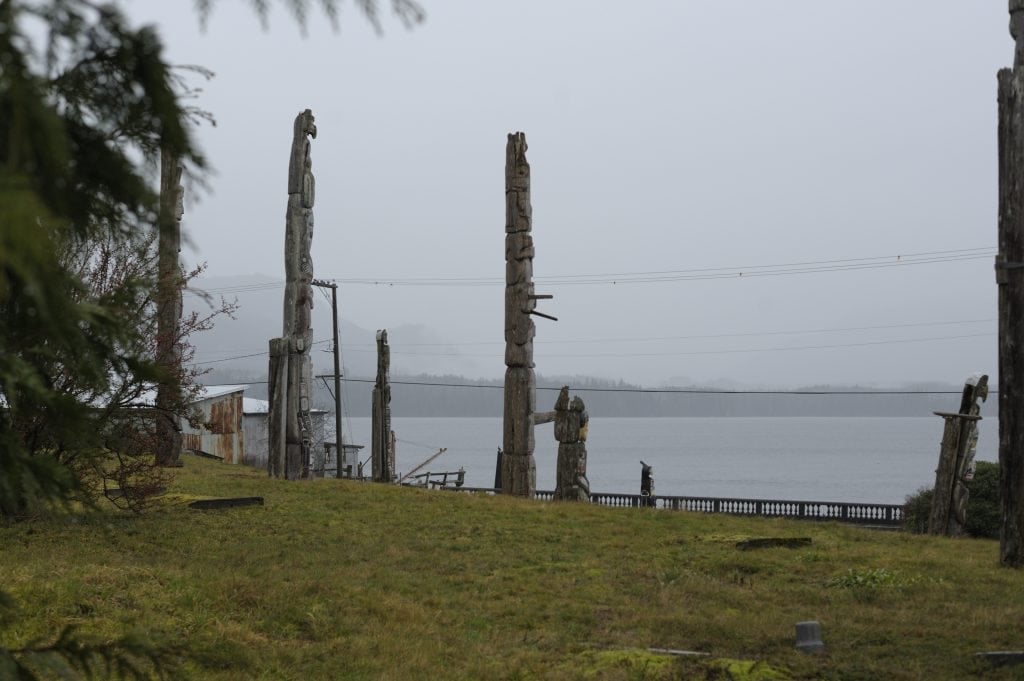
“Usually we put them at the back,” he explains. He drives us to the ‘Na̱mg̱is burial grounds, where he wants to show me the steel braces at the backs of the poles there, overlooking the bay. The Port McNeill pole, he says, has a brace in the middle — which is aesthetically pleasing but not great at withstanding the weather.
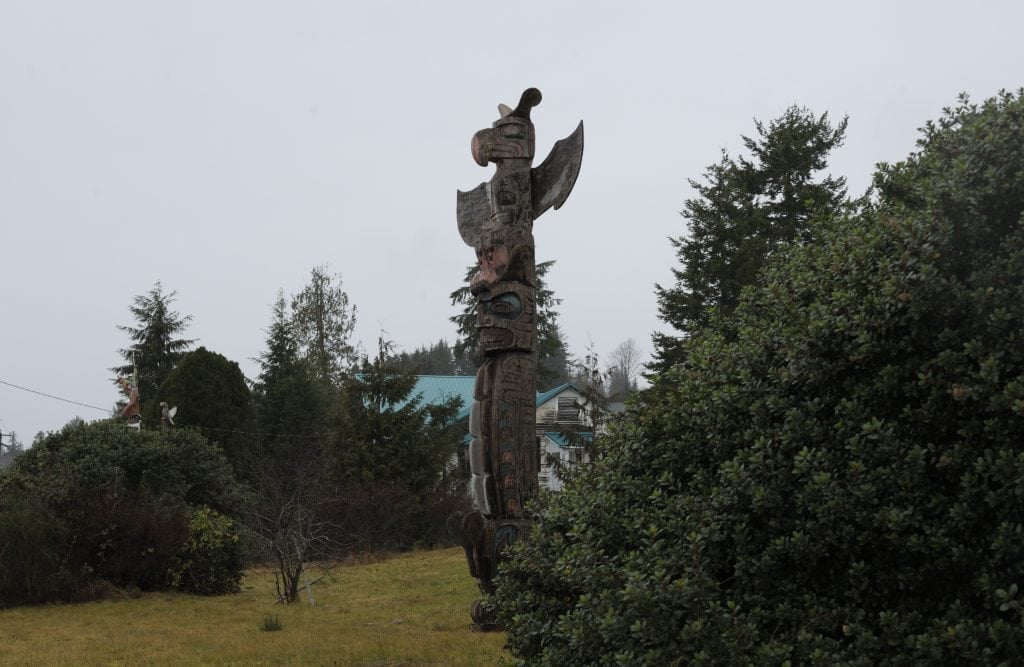
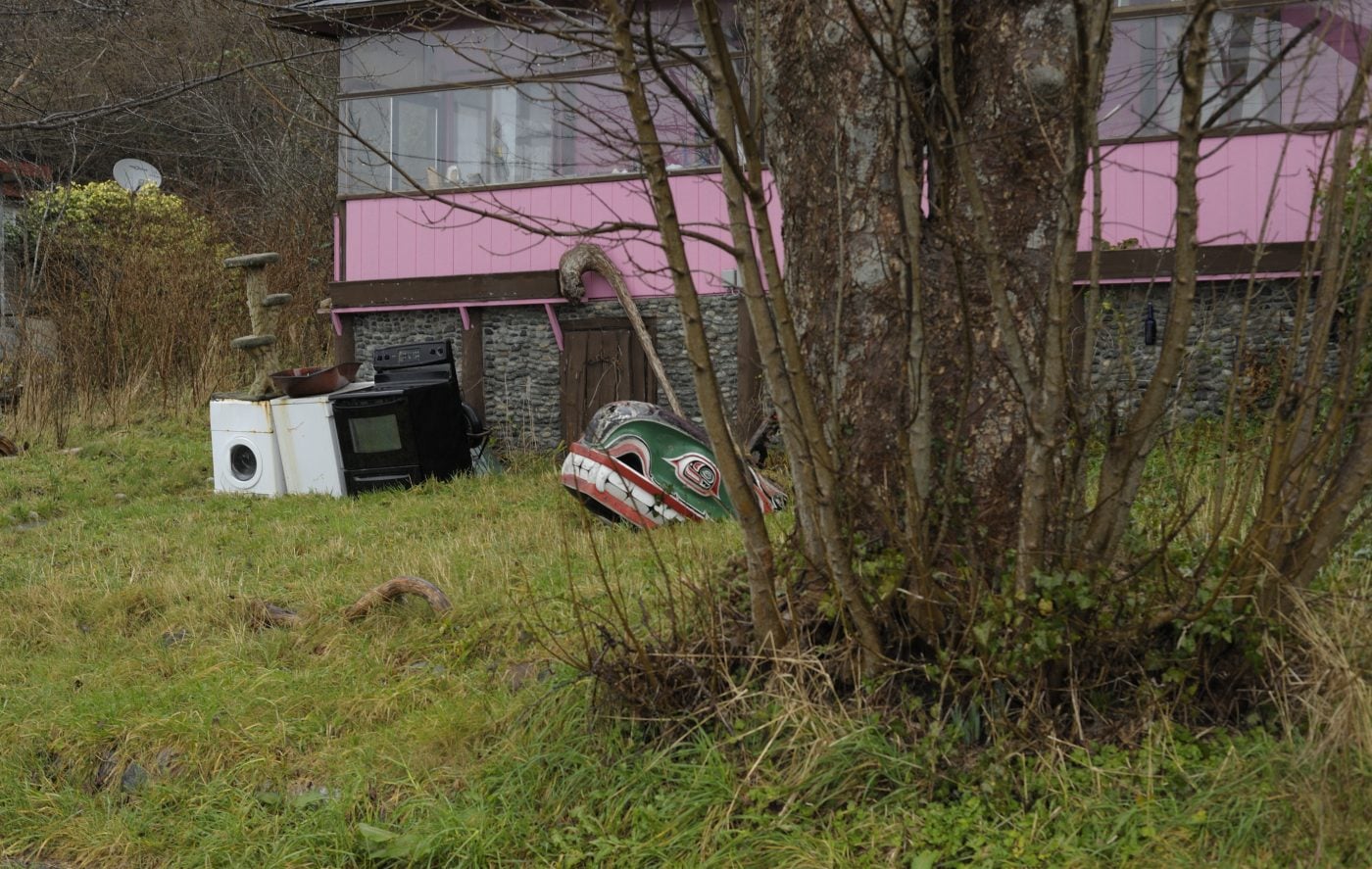
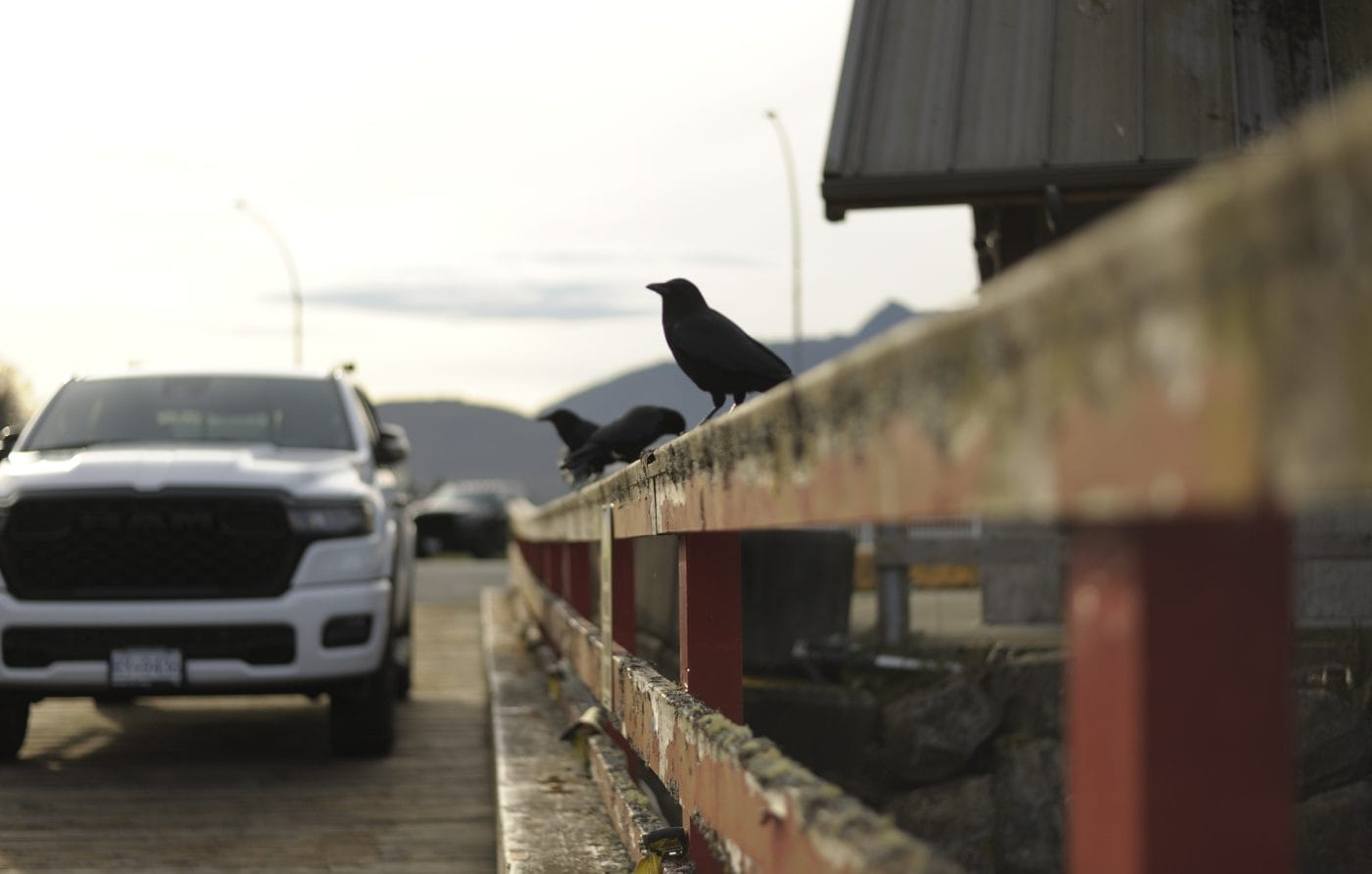
Alert Bay is a quiet community on a little island near the northern tip of Vancouver Island. Sea otters and seals swim the semi-protected waters of the bay as eagles lazily circle above the trees at the top of the hill that climbs steeply up from the shoreline. The weather here can be relentless, especially this time of year. Winter storms batter the community with heavy winds that regularly knock out the power, sometimes for days on end. Svanvik says things have changed since he was young. Then, he says, the island would often be blanketed under deep snow for weeks at a time. Now, snow is a rarity and the storms are unpredictable, sometimes blowing in from the opposite direction to the prevailing winds.
“They said we didn’t need the land because we had the ocean.”
‘Na̱mg̱is Chief Ho’miskanis, Don Svanvik
As we drive around the island, we talk about stewardship and sovereignty and how the ‘Na̱mg̱is, who are part of the Kwakwa̱ka̱ʼwakw, or Kwakʼwala-speaking peoples, made ‘Ya̱lis, a winter village on the little island, their permanent home. He says when the colonial government set up the reserve system and allocated land to settlers, ‘Na̱mg̱is were told they didn’t need it.
“I don’t know how many acres we have but it’s not much,” he says. “They said we didn’t need the land because we had the ocean.”


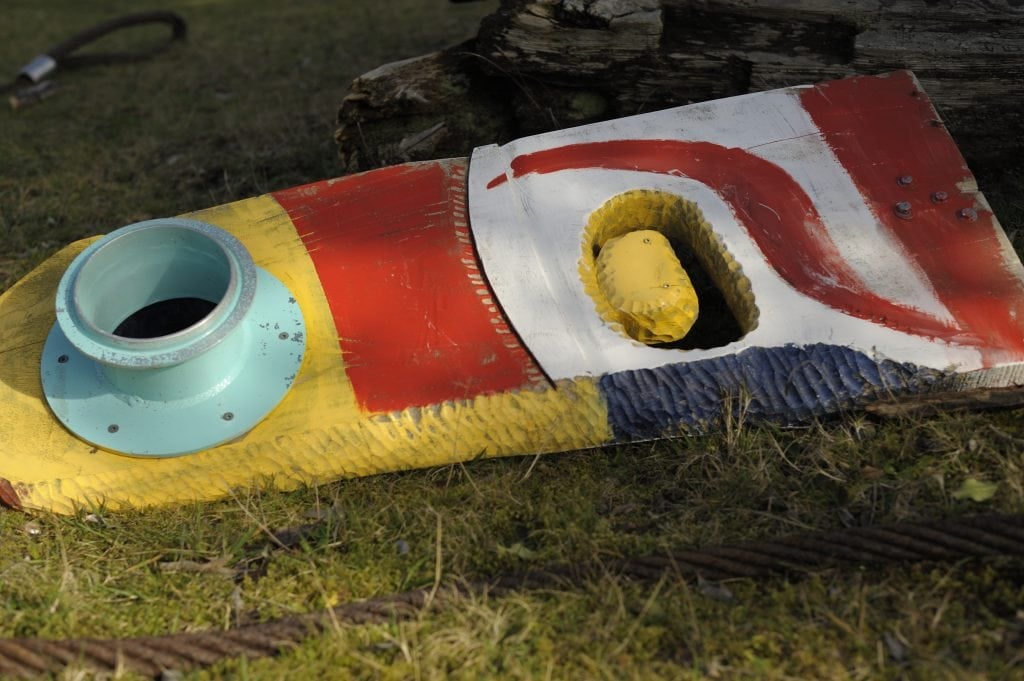
Winter here moves at a slow pace. Around 1,000 people, give or take, live on Cormorant Island, which is about four kilometres long and one kilometre wide. Little in the way of shops and restaurants are open and the town’s mayor, Dennis Buchanan, says it’s hard to attract businesses, in part because of the regular power outages.
“One year we had 21 power outages,” he tells me over a cup of coffee. “The grocery store here lost over $40,000 in product one time.”
Still, Buchanan says he wouldn’t trade it for anything. Arriving here in the 1970s, he fell in love with the place (and a woman) and never left.


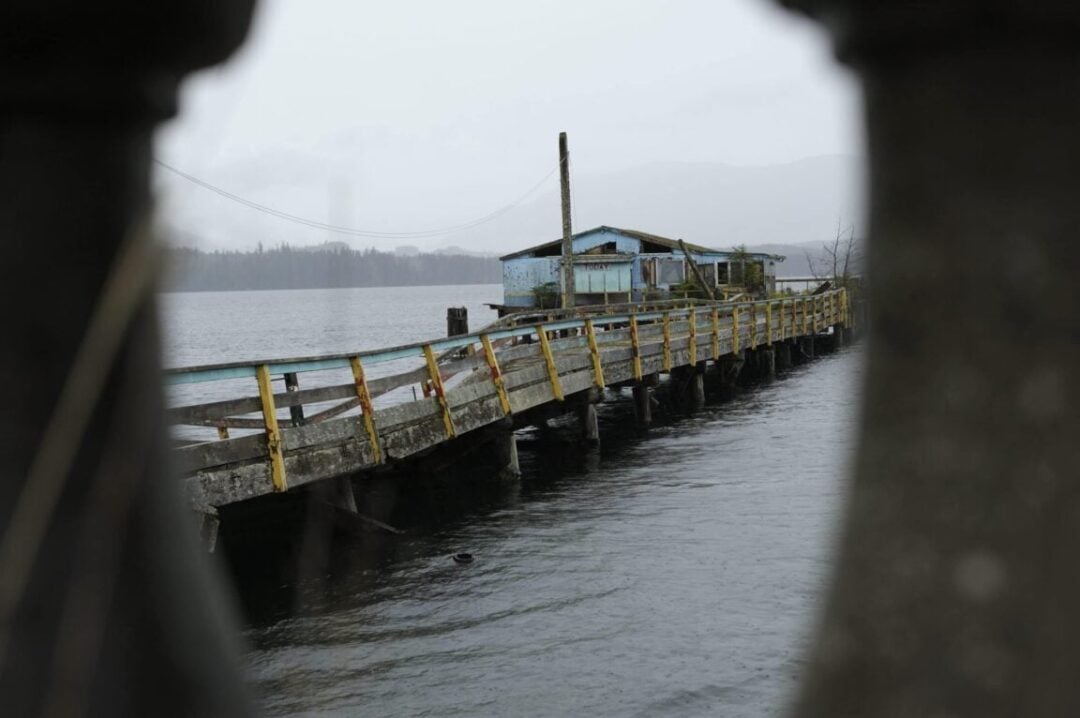
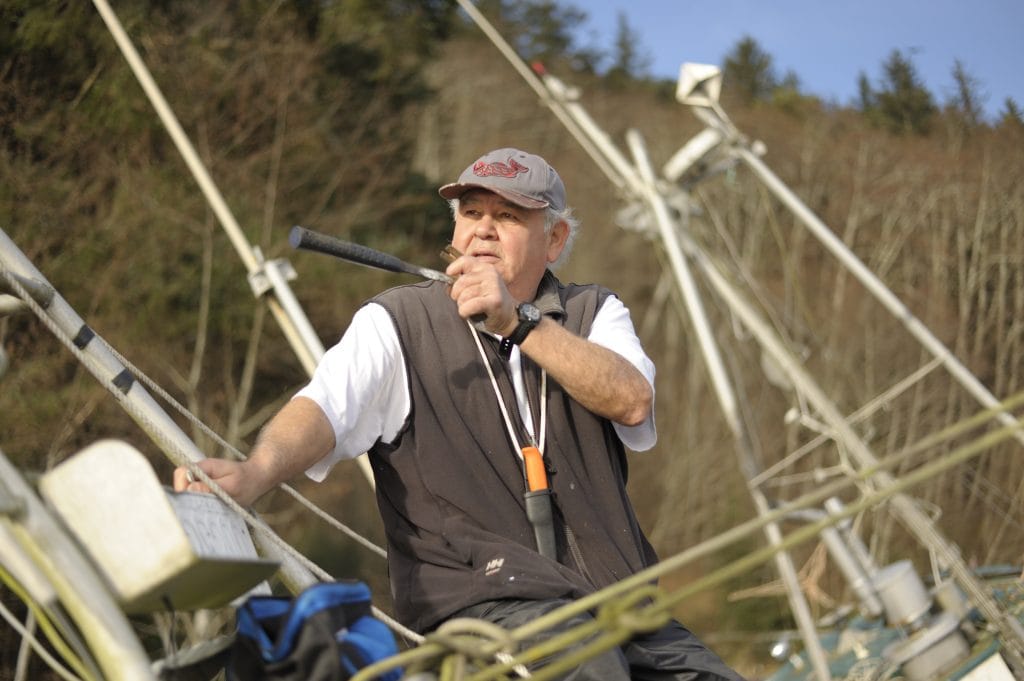
At the far end of the bay, past the village of ‘Ya̱lis, a handful of derelict boats sit on the gravelly beach, tilted at crazy angles. Lorne Smith, a clam-digger, stands on the deck of one, tying off a rope. He says he’s hoping to salvage the radar mast when the tide comes in.
John Webster pulls up in his truck, poking around to see if there’s anything worth snagging for his boat. Among other jobs, he fishes up north with the Haida. The two joke with each other and tell me about the challenges of getting fish these days. Both remain hopeful about the future but there’s a wistfulness to their stories that says times are hard.


While the fishing fleet here is a shadow of its former size, the ‘Na̱mg̱is and non-Indigenous allies are working to rebuild struggling fish populations and develop land-use plans that support sustainable forestry practices. Elected Chief Victor Isaac wasn’t available to meet in person, but tells me on a phone call the nation is making strides at getting the provincial government to respect ‘Na̱mg̱is sovereignty.
“Everyone was in their siloes before,” he says. “They didn’t listen to us, the stewards.”
He says things are slowly changing and people are coming together, listening at last.

G̱ilakas’la (thank you) to the ‘Na̱mg̱is, stewards of all the places photographed for this story, and to everyone who made time to speak with me.
Updated on Feb. 13, 2026, at 8:44 p.m. PT: This story was updated to correct the location of a totem pole in Port McNeill, not Port Hardy. It was also updated to add context that the village of ‘Ya̱lis predates the arrival of settlers.